Are Robot Vacuums Worth It? Pros, Cons and Costs Explained
You’ve probably had this debate with yourself while scrolling past yet another robot vacuum ad: is this actually going to change how you clean, or is it a £200 gadget that ends up stuck under the sofa within a month? It’s a fair question, and the honest answer is: it depends entirely on your home, your floors, and how much you actually hate vacuuming. Let’s break down the real costs, the genuine upsides, and where robot vacuums still fall short.
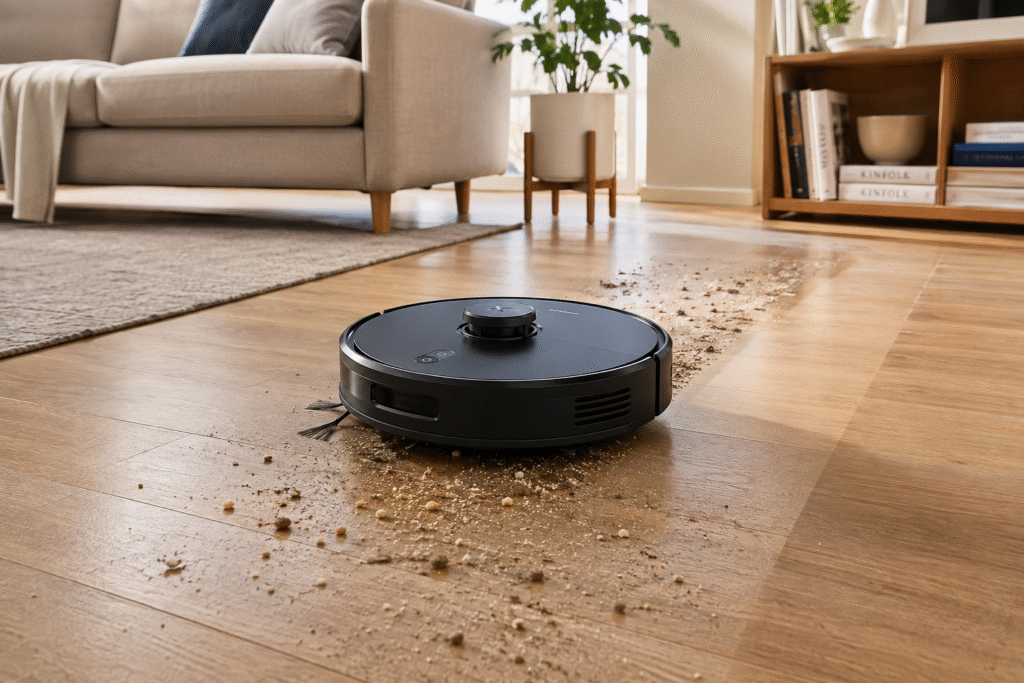
What a Robot Vacuum Actually Costs
Price is usually the first thing people get wrong they assume “robot vacuum” means one price bracket, when really it’s three very different products wearing the same label.
| Tier | Price Range | What You Get |
| Budget | Under £150 | Basic suction, sensor-based navigation, manual bin emptying |
| Mid-range | £150–£400 | Stronger suction, app control, some mapping, longer runtime |
| Premium / Omni | £500–£1,200+ | LiDAR mapping, self-emptying base, mopping, self-washing dock |
The jump in price almost always buys you convenience, not just cleaning power. A £120 budget model and a £150 mid-range model might clean your floors almost identically; the £150 one just does it with a better app and a bit more polish. It’s only once you get into the £500+ “omni” category that you’re paying for genuinely different technology.
The Case For: Why People Swear By Them
The appeal is simple once you actually live with one:
They’re genuinely good with pet hair now. Brushless designs (like the ones on budget models such as the Lefant M210) avoid the tangling that used to be the biggest complaint about robot vacuums.
It happens without you thinking about it. Scheduled cleans mean floors get done daily instead of “whenever I get round to it.”
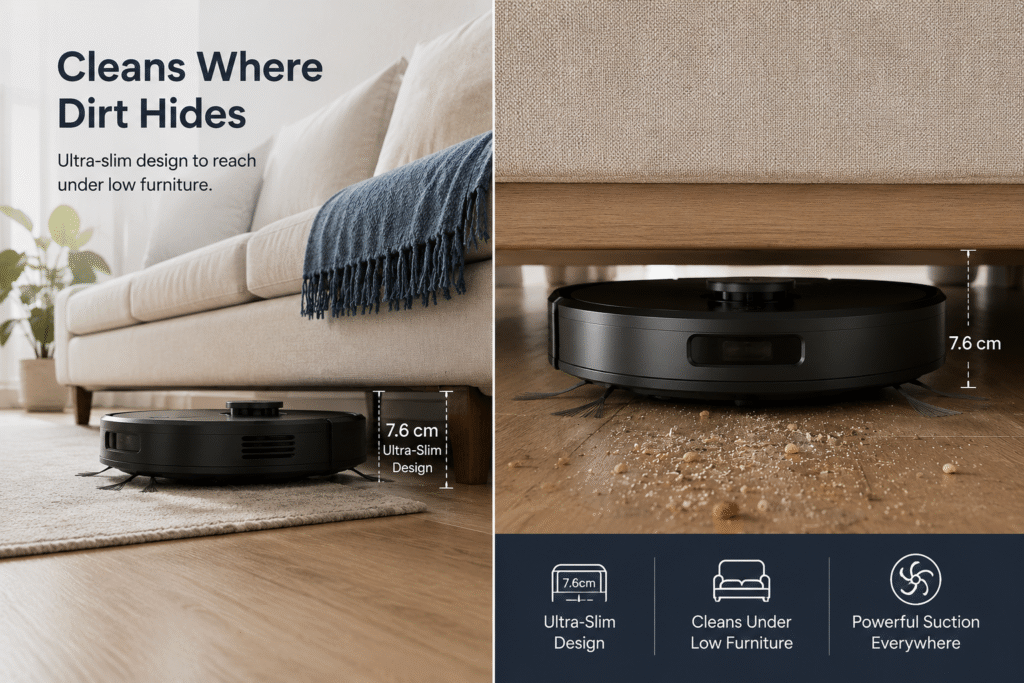
They reach places you don’t. Under beds, under sofas, behind toilets low-profile bodies get into gaps a normal vacuum head can’t.
Maintenance habits improve. Because it’s doing small, frequent cleans, dust and pet hair never get the chance to build up the way they do between weekly manual vacuum sessions.
The Case Against: Where They Fall Short
This is the part most reviews skip, so here’s the honest robot vacuum pros and cons picture:
- They’re not a replacement for deep cleaning. Thick rugs, stairs, and upholstery still need a proper upright or handheld vacuum.
- Budget models can’t map your home. Cheaper vacuums (like the M210) rely on real-time sensors rather than stored maps, which means less efficient cleaning in large or complex layouts.
- Maintenance isn’t zero. Brush rolls, filters, and sensors all need occasional cleaning skip this and performance drops fast.
- Clutter is the enemy. Cables, shoes, and toys left on the floor genuinely trip up even expensive models.
Robot Vacuum vs Normal Vacuum: What’s the Actual Difference?
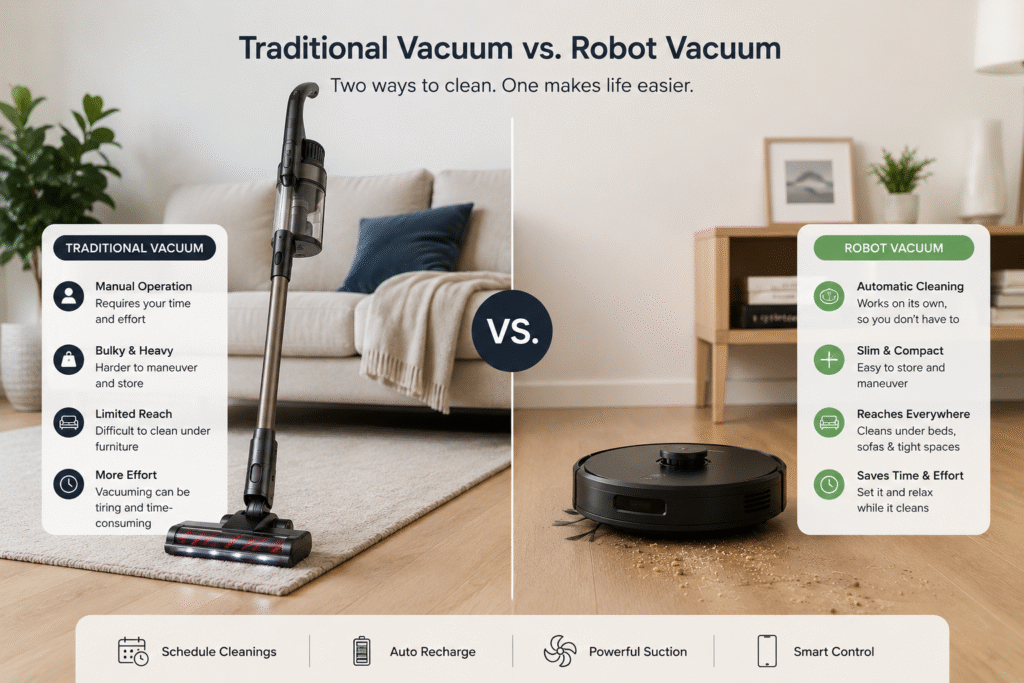
This isn’t really an either/or decision, and treating it that way is where a lot of buyers go wrong. A normal vacuum (upright, cylinder, or stick) still wins on raw suction power, edge-to-edge coverage on stairs, and deep-cleaning thick carpet. A robot vacuum wins on frequency and effort. It’s the difference between a floor that’s “clean enough” every single day versus “properly clean” once a week when you get round to it.
Most people who are happy with their robot vacuum aren’t the ones who ditched their normal vacuum entirely; they’re the ones using the robot for daily maintenance and keeping a stick vacuum for the occasional deep clean.
Beyond Vacuuming: The Rise of the “Omni” Robot
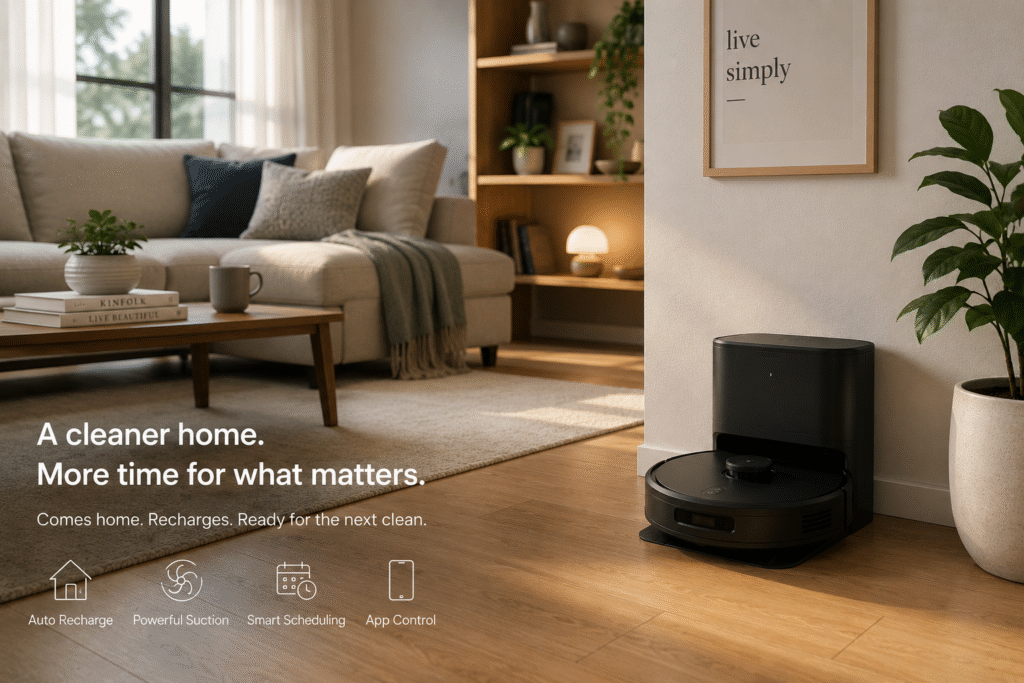
If you’ve seen the term omni robot vacuum floating around, it refers to the newest category of all-in-one systems vacuums that dock into a base station that empties the dustbin, refills water for mopping, and even washes the mop pads automatically. The Ecovacs X1 is one of the models that helped popularise this category, combining vacuuming and mopping with a base station that handles almost all the maintenance itself.
This is genuinely where the “worth it” question shifts. At the budget and mid-range level, you’re weighing convenience against price. At the omni level, you’re paying for near-total hands-off cleaning which is a very different value proposition, and one that only makes sense if daily maintenance is something you’d otherwise never get round to.
So, Are Robot Vacuums Worth It?
Here’s the honest breakdown by situation:
- Small flat, mostly hard floors, tight budget? Yes, a budget model earns its keep fast.
- Family home with pets and mixed flooring? Yes, especially if you get one with strong suction and app scheduling.
- Large multi room house, want it to genuinely replace regular vacuuming and mopping? Only if you’re willing to spend at the omni level anything less will frustrate you.
- You barely vacuum manually as it is? A robot vacuum won’t fix that habit gap on its own, but it will quietly do more than nothing ever did.
Our Picks by Budget
Best budget pick – Eufy Robot Vacuum Quiet, strong suction for the price, and one of the easiest apps to use. A smart entry point if you’re testing whether robot vacuums fit your routine.
https://amzn.to/4qABFlp
Best ultra-budget pick – Lefant M210 Brushless suction, tangle-free design, and a genuinely usable app, built for smaller homes without the premium price tag.
https://amzn.to/4y1urJp
Best mopping add-on – iRobot Braava If your robot vacuum doesn’t mop, the Braava handles hard floors separately, giving you a proper two-step clean without paying omni-tier prices.
https://amzn.to/4hU5mM2
The Bottom Line
So, are robot vacuums worth it? For most homes, yes but “worth it” depends on matching the tier to your actual living situation rather than chasing the flashiest model. Start with what your floors and budget actually need, and the rest of the decision gets a lot simpler.