Uncategorised
Are Robot Vacuums Worth It? Pros, Cons and Costs Explained

You’ve probably had this debate with yourself while scrolling past yet another robot vacuum ad: is this actually going to change how you clean, or is it a £200 gadget that ends up stuck under the sofa within a month? It’s a fair question, and the honest answer is: it depends entirely on your home, your floors, and how much you actually hate vacuuming. Let’s break down the real costs, the genuine upsides, and where robot vacuums still fall short.
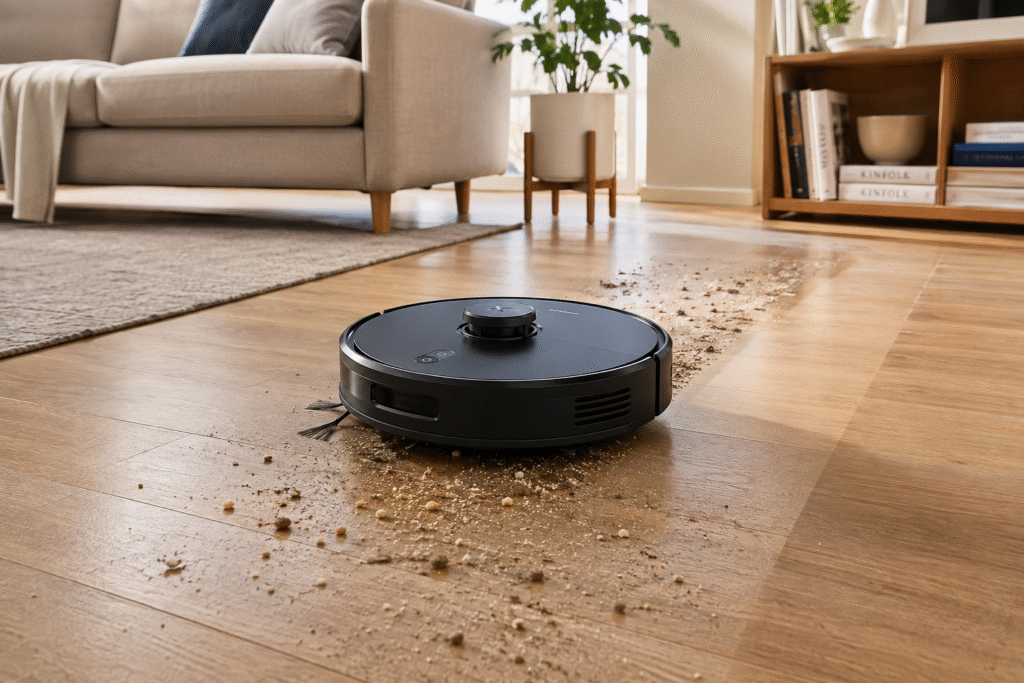
What a Robot Vacuum Actually Costs

Price is usually the first thing people get wrong they assume “robot vacuum” means one price bracket, when really it’s three very different products wearing the same label.

TierPrice RangeWhat You Get
BudgetUnder £150Basic suction, sensor-based navigation, manual bin emptying
Mid-range£150–£400Stronger suction, app control, some mapping, longer runtime
Premium / Omni£500–£1,200+LiDAR mapping, self-emptying base, mopping, self-washing dock

The jump in price almost always buys you convenience, not just cleaning power. A £120 budget model and a £150 mid-range model might clean your floors almost identically; the £150 one just does it with a better app and a bit more polish. It’s only once you get into the £500+ “omni” category that you’re paying for genuinely different technology.

The Case For: Why People Swear By Them

The appeal is simple once you actually live with one:

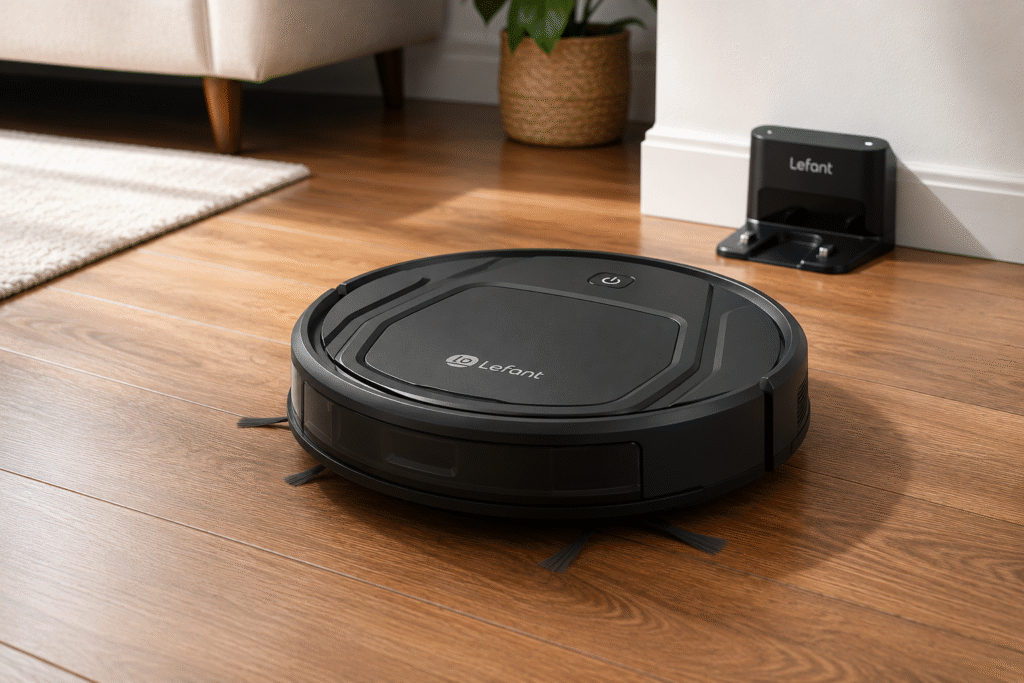
They’re genuinely good with pet hair now. Brushless designs (like the ones on budget models such as the Lefant M210) avoid the tangling that used to be the biggest complaint about robot vacuums.

It happens without you thinking about it. Scheduled cleans mean floors get done daily instead of “whenever I get round to it.”

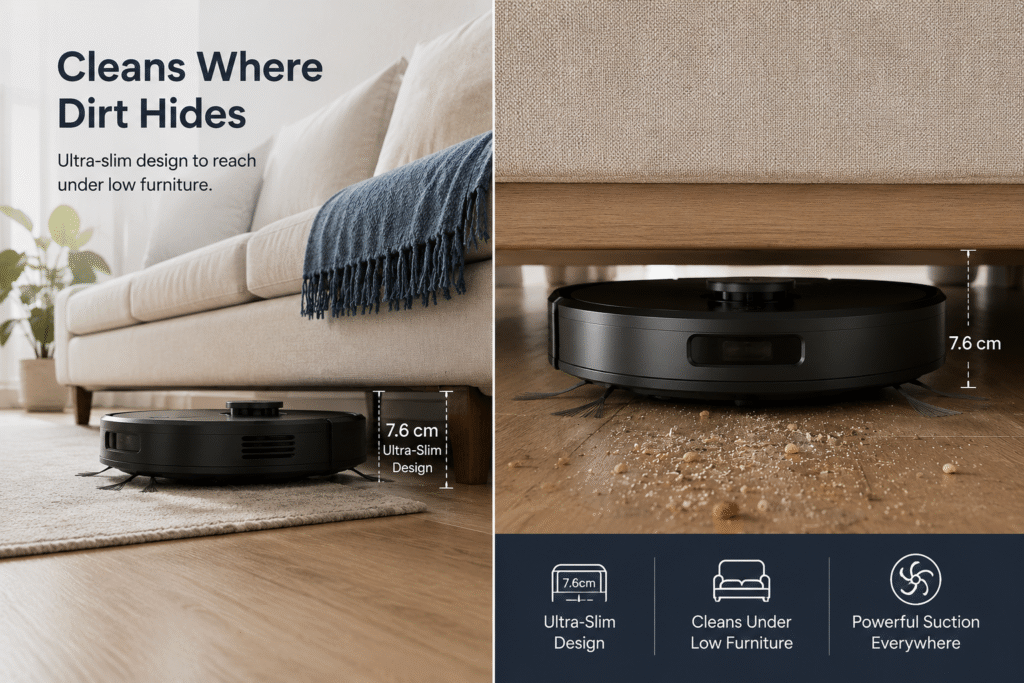
They reach places you don’t. Under beds, under sofas, behind toilets low-profile bodies get into gaps a normal vacuum head can’t.

Maintenance habits improve. Because it’s doing small, frequent cleans, dust and pet hair never get the chance to build up the way they do between weekly manual vacuum sessions.
The Case Against: Where They Fall Short

This is the part most reviews skip, so here’s the honest robot vacuum pros and cons picture:

  • They’re not a replacement for deep cleaning. Thick rugs, stairs, and upholstery still need a proper upright or handheld vacuum.
  • Budget models can’t map your home. Cheaper vacuums (like the M210) rely on real-time sensors rather than stored maps, which means less efficient cleaning in large or complex layouts.
  • Maintenance isn’t zero. Brush rolls, filters, and sensors all need occasional cleaning skip this and performance drops fast.
  • Clutter is the enemy. Cables, shoes, and toys left on the floor genuinely trip up even expensive models.

Robot Vacuum vs Normal Vacuum: What’s the Actual Difference?

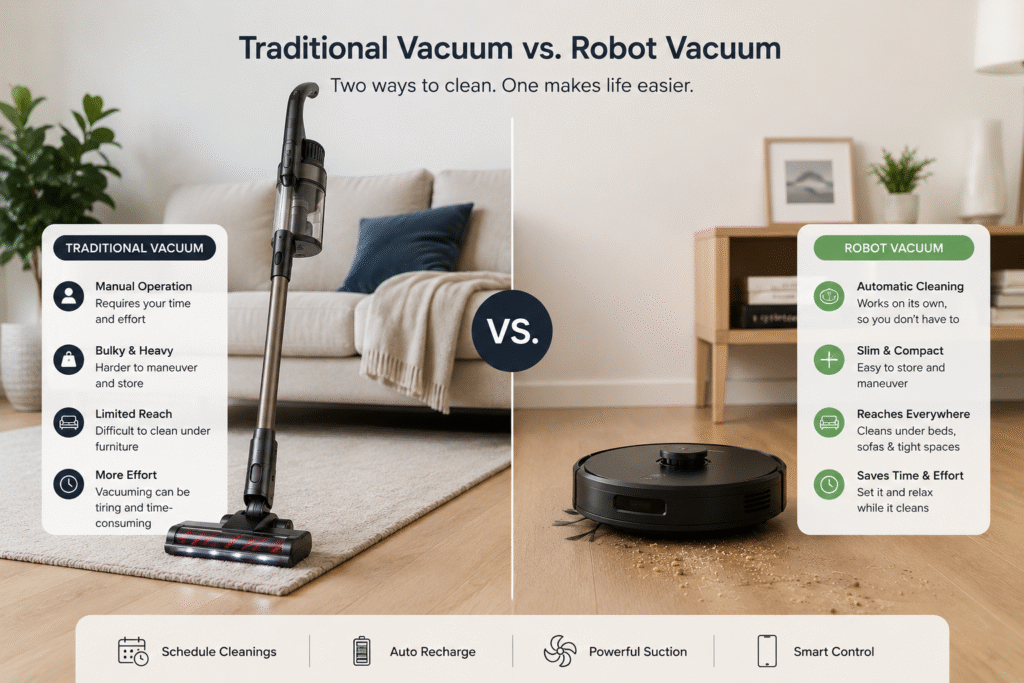
This isn’t really an either/or decision, and treating it that way is where a lot of buyers go wrong. A normal vacuum (upright, cylinder, or stick) still wins on raw suction power, edge-to-edge coverage on stairs, and deep-cleaning thick carpet. A robot vacuum wins on frequency and effort. It’s the difference between a floor that’s “clean enough” every single day versus “properly clean” once a week when you get round to it.

Most people who are happy with their robot vacuum aren’t the ones who ditched their normal vacuum entirely; they’re the ones using the robot for daily maintenance and keeping a stick vacuum for the occasional deep clean.
Beyond Vacuuming: The Rise of the “Omni” Robot

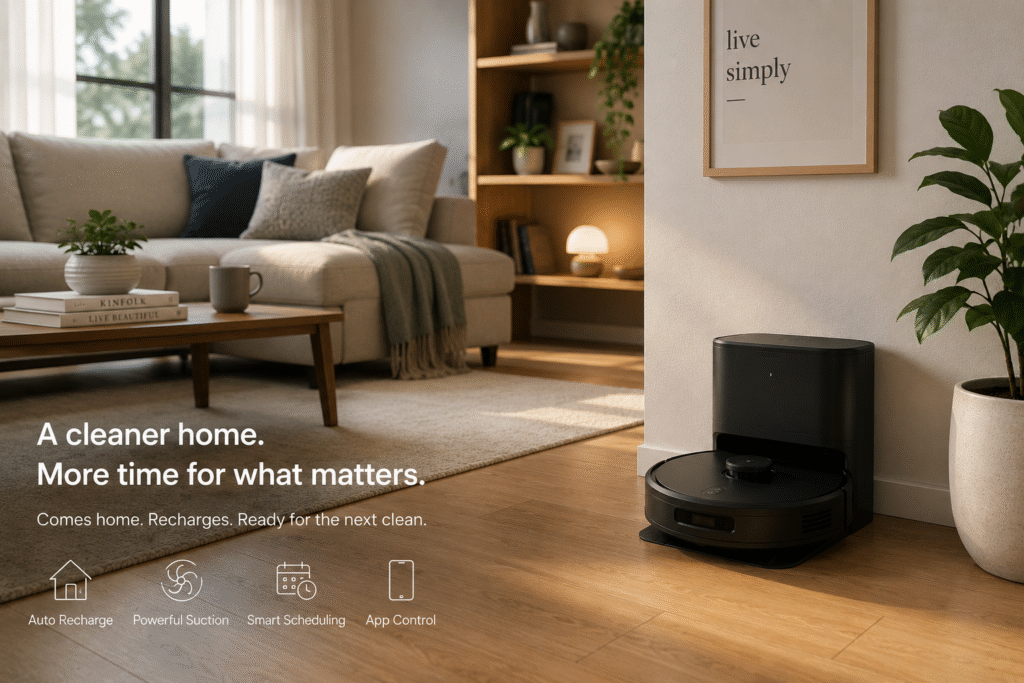
If you’ve seen the term omni robot vacuum floating around, it refers to the newest category of all-in-one systems  vacuums that dock into a base station that empties the dustbin, refills water for mopping, and even washes the mop pads automatically. The Ecovacs X1 is one of the models that helped popularise this category, combining vacuuming and mopping with a base station that handles almost all the maintenance itself.

This is genuinely where the “worth it” question shifts. At the budget and mid-range level, you’re weighing convenience against price. At the omni level, you’re paying for near-total hands-off cleaning  which is a very different value proposition, and one that only makes sense if daily maintenance is something you’d otherwise never get round to.

So, Are Robot Vacuums Worth It?

Here’s the honest breakdown by situation:

  • Small flat, mostly hard floors, tight budget? Yes, a budget model earns its keep fast.
  • Family home with pets and mixed flooring? Yes, especially if you get one with strong suction and app scheduling.
  • Large multi room house, want it to genuinely replace regular vacuuming and mopping? Only if you’re willing to spend at the omni level  anything less will frustrate you.
  • You barely vacuum manually as it is? A robot vacuum won’t fix that habit gap on its own, but it will quietly do more than nothing ever did.
Our Picks by Budget

Best budget pick – Eufy Robot Vacuum Quiet, strong suction for the price, and one of the easiest apps to use. A smart entry point if you’re testing whether robot vacuums fit your routine.
https://amzn.to/4qABFlp

Best ultra-budget pick – Lefant M210 Brushless suction, tangle-free design, and a genuinely usable app, built for smaller homes without the premium price tag.
https://amzn.to/4y1urJp

Best mopping add-on – iRobot Braava If your robot vacuum doesn’t mop, the Braava handles hard floors separately, giving you a proper two-step clean without paying omni-tier prices.
https://amzn.to/4hU5mM2

The Bottom Line

So, are robot vacuums worth it? For most homes, yes but “worth it” depends on matching the tier to your actual living situation rather than chasing the flashiest model. Start with what your floors and budget actually need, and the rest of the decision gets a lot simpler.
Uncategorised
Lefant M210 Review: The Best Robot Vacuum Under £229?

Here’s the problem with shopping for a “budget” robot vacuum: half of them are budget because they’re actually bad, and the other half are budget because the brand just hasn’t marked up the price yet. The Lefant M210 falls into the second camp  and after digging into what’s actually under the hood, it’s easy to see why it keeps showing up on best-budget lists.

At a Glance

SpecLefant M210
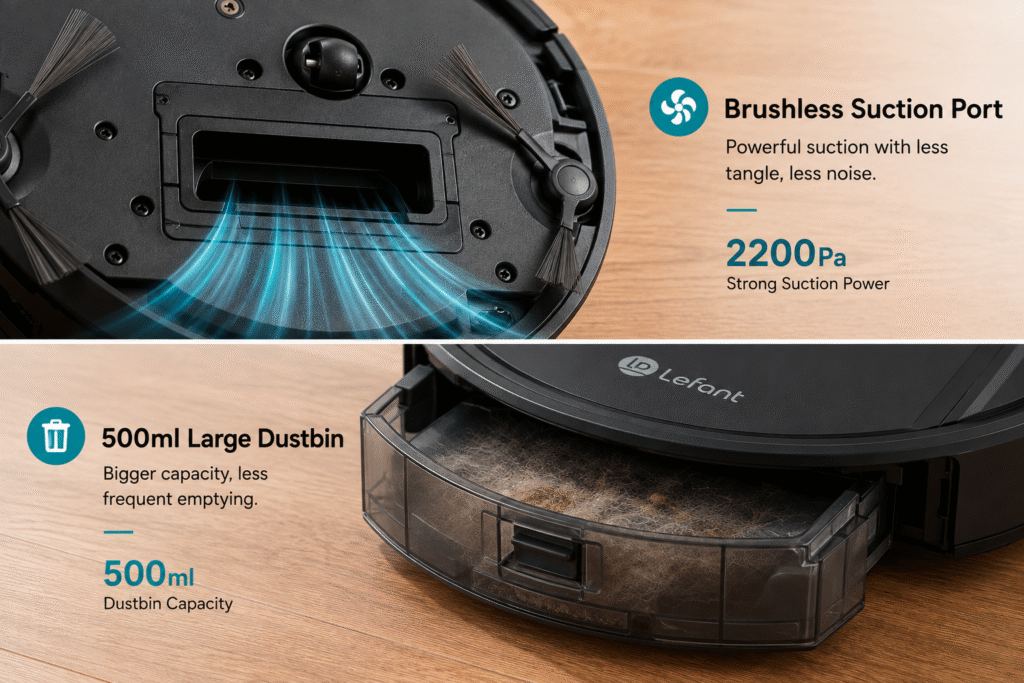
Suction power2,000–2,200 Pa
Dustbin capacity500ml
Battery typeLithium iron phosphate
RuntimeUp to 120 minutes
Height2.99 inches
Weight3kg
NavigationInfrared sensors (no LiDAR mapping)
App controlYes (Lefant App)
Voice controlAmazon Alexa, Google Assistant
Self-emptyingNo
Best forSmall medium homes, hard floors, pet owners

https://amzn.eu/d/00Plz4zR

Should You Buy It? The Short Answer

Buy it if:

  • Your home is a flat, studio, or single open-plan floor
  • You mostly have hard floors or low-pile carpet
  • You have pets and want a brush that won’t tangle
  • You want app and voice control without paying flagship prices

Skip it if:

  • You live in a large, multi-room house
  • Your floors are mostly thick, deep-pile carpet
  • You specifically want a self-emptying dock

What It’s Actually Like to Use

Unbox the M210 and the first thing you notice is how low it sits  at under 3 inches tall, it disappears under sofas, bed frames, and kitchen units that a normal vacuum head can’t touch. It’s light too, around 3kg, so lifting it out for a spot-clean doesn’t feel like a chore.

Set it running and the brushless suction port does the work that a roller brush usually handles on other budget models. That’s a deliberate design choice, not a corner cut: without a roller, there’s nothing for pet hair or long hair to wrap around and jam, which is usually the first thing to break on cheap robot vacuums. Pulling 2,000–2,200 Pa of suction through that port, it handles crumbs, dust, and pet hair on hardwood and tile in a single pass, and the 500ml bin paired with a HEPA filter means you’re not emptying it every day or breathing the dust straight back out.

Where it starts to show its price tag is navigation. There’s no LiDAR here; the M210 uses FreeMove 3.0 and 6D infrared sensors to detect obstacles and reroute as it goes, rather than building and storing a map of your home. In a one-bedroom flat or open-plan floor, you won’t notice much difference. In a sprawling, multi-room house, it’ll take longer and cover ground less efficiently than a mapped vacuum would.

The Lefant App is a pleasant surprise. Scheduling, suction adjustment, cleaning history, and manual driving are all in there, and it’s genuinely easy to navigate. Alexa and Google Assistant both work reliably too, so hands-free start-up isn’t just a box-ticking feature.

Battery life is a real strength: up to 120 minutes on low suction, which covers most small-to-medium homes in one go, with auto-return-to-dock when it’s running low. The catch is there’s no self-emptying base at this price you’re emptying the bin by hand after each run.

https://amzn.to/4wJf6x3

How It Stacks Up

Lefant M210Typical £150–200 rivalTypical £400+ flagship
Suction2,000–2,200 Pa2,500–3,000 Pa8,000+ Pa
MappingNoSometimes (basic)Yes (LiDAR)
Self-emptyingNoRarelyOften
Pet-hair friendlyYes (brushless)VariesYes (anti-tangle brush)
Best forSmall flats, budget buyersMid-size homesLarge homes, hands-off cleaning

The pattern is clear: you’re not paying for mapping or automation here, you’re paying for solid, dependable suction and a genuinely usable app in a compact body. For the size of home it’s built for, that trade-off works.

The Verdict

The Lefant M210 isn’t trying to be a flagship, and that’s exactly why it works. It’s a budget robot vacuum UK buyers can pick up without feeling like they’re compromising on the basics  suction, app control, and battery life are all solid. Where it asks you to compromise is navigation intelligence and hands-off automation, and for a small-to-medium home, most people won’t miss either.

If you’ve got a bigger house full of thick carpet, save up for something with mapping. If you’re furnishing a flat, a studio, or a single-floor home and want dependable daily cleaning without the premium price tag, this is one of the smartest Lefant robot vacuum picks available right now.

https://amzn.to/4hXfByV

Uncategorised
Eufy Robot Vacuum Review: Quiet, Affordable, But Is It Any Good?

If you’ve been scrolling through robot vacuum listings and keep landing on the same brand, you’re not imagining it. Eufy has quietly become one of the go-to names for anyone who wants automated cleaning without a flagship price tag. But “affordable” and “actually good” don’t always go together — so in this Eufy robot vacuum review, we’re breaking down exactly what you get for your money, where it falls short, and whether it deserves a spot in your home.

Quick Verdict

If you want the short version: the eufy vacuum cleaner range punches well above its price point on suction and quiet operation, the companion app is genuinely easy to use, and it handles pet hair and everyday dust better than most vacuums at this price. It’s not going to out-map a £1,000 flagship, but for most UK homes, it doesn’t need to.
https://amzn.eu/d/04dVlNDl

Who Makes Eufy, and Can You Trust the Brand?

Eufy is the smart-home arm of Anker, a company best known for reliable chargers and power banks  which matters more than it sounds. It means the engineering behind the motor, battery, and sensors comes from a brand with a track record in hardware, not a no-name reseller. Eufy entered the robot vacuum space to offer serious cleaning tech at a fraction of the cost of the big names, and that positioning still holds today.

Design and Build Quality

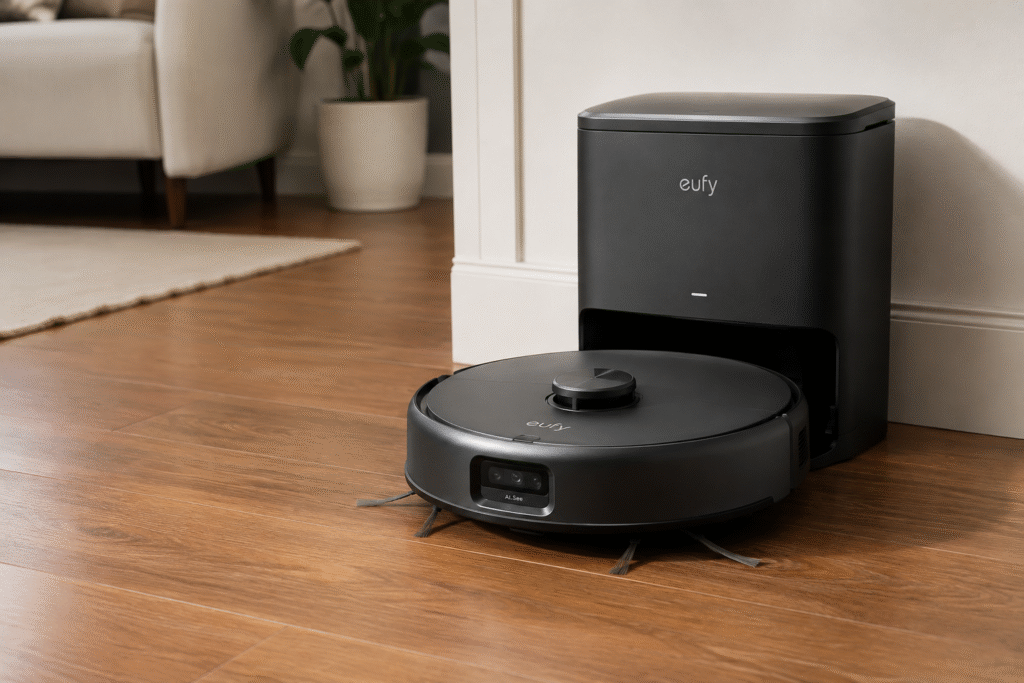
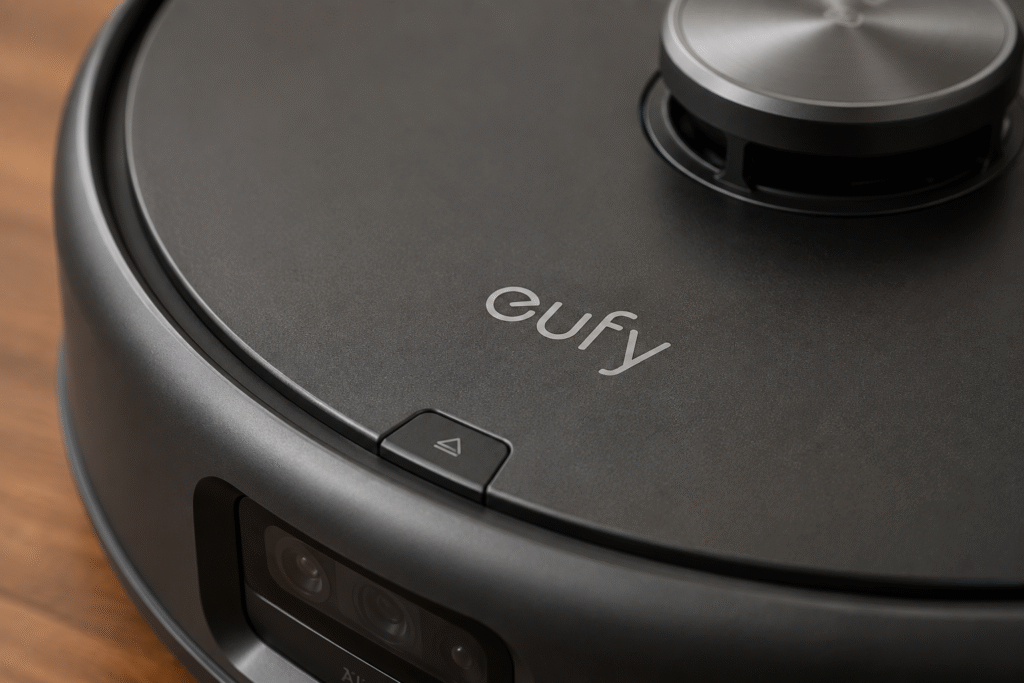
Out of the box, the build feels sturdier than the price suggests. The low-profile design (many models sit under 3 inches tall) means it slides comfortably under sofas, beds, and kitchen units  areas that regular upright vacuums simply can’t reach. The matte finish resists fingerprints and scuffs better than the glossy plastic used on some competitors, and the dustbin pops out cleanly for emptying without the fiddly latches you get on cheaper alternatives.

Suction Power and Cleaning Performance

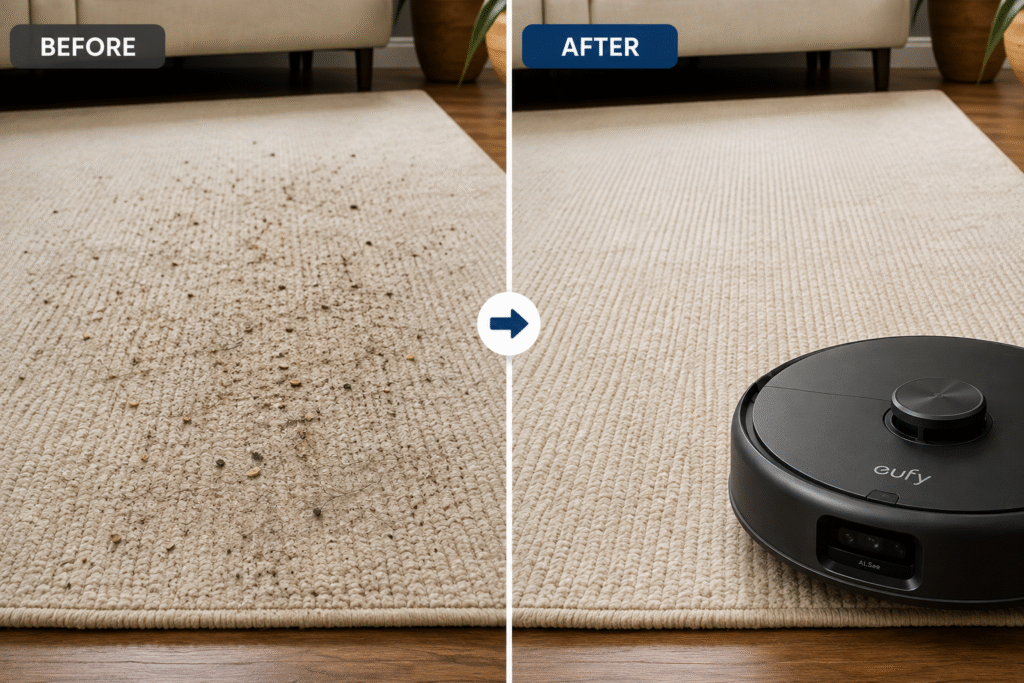
This is where an eufy robovac review UK audience really wants answers, and it’s the strongest part of the package. Depending on the model, suction ranges from solid everyday performance up to genuinely powerful territory that rivals vacuums costing two or three times as much. On hardwood and tile, it picks up crumbs and dust in a single pass. On carpet, boost technology kicks in automatically, ramping up power the moment it detects a change in floor texture  a small feature that makes a noticeable difference if your home mixes flooring types.

Pet owners in particular tend to rate this range highly, since anti-tangle brush designs on newer models cut down on the hair-wrapping mess that plagues cheaper robot vacuums.https://amzn.to/4wxepWV

Is It Actually Quiet?

Noise is one of the most searched concerns for robot vacuums, and it’s right there in the headline for a reason. Running at standard power, most Eufy models sit in a noise range comparable to a normal conversation — noticeably quieter than budget competitors that sound more like a hairdryer. It only gets loud on max suction mode, which most users only need for a deep weekly clean rather than daily runs. If you work from home or have a baby napping upstairs, this is one of the areas where Eufy genuinely delivers on its promise.

Smart Features and App Experience

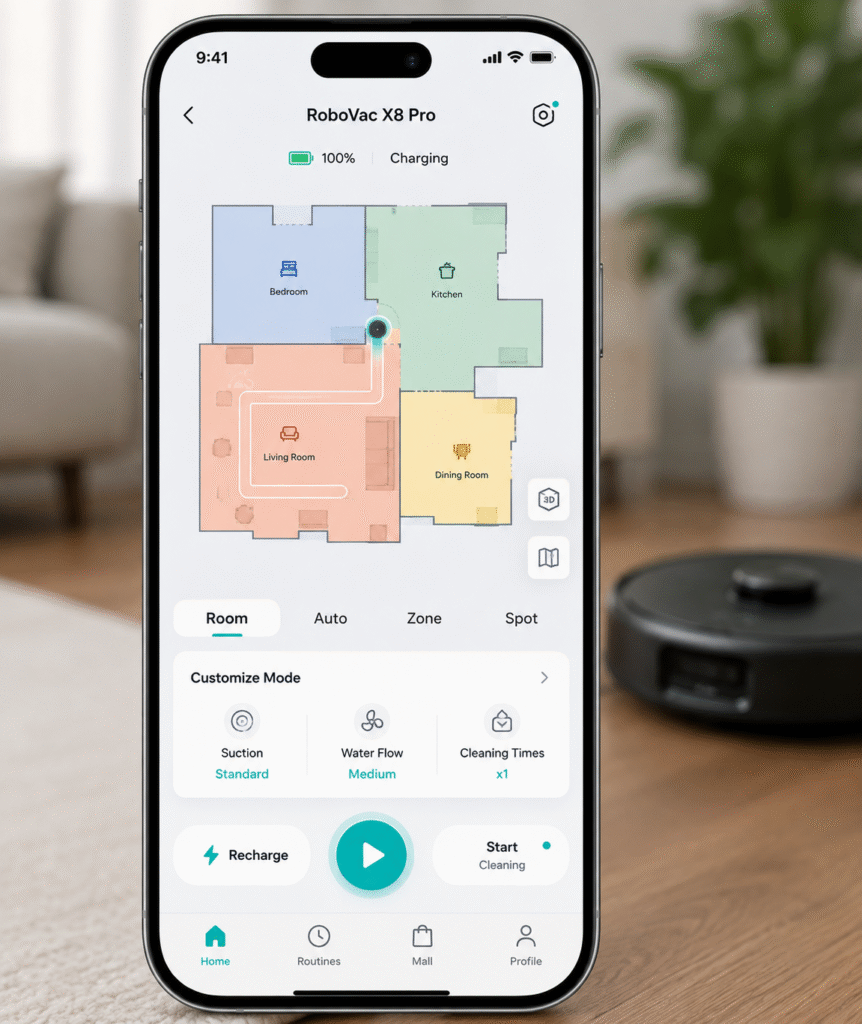
The Eufy Clean app is refreshingly uncluttered. Room mapping, no-go zones, scheduling, and cleaning history are all easy to find without digging through menus. Voice control via Alexa and Google Assistant works reliably, and setup typically takes under ten minutes from unboxing to first clean.

Where it loses a few points against premium rivals is obstacle avoidance — it handles cables and shoes reasonably well but isn’t as sharp at spotting small objects as the top-tier AI-powered models from other brands.

Battery Life and Runtime

Most models comfortably cover a mid-sized UK home (up to around 2,500 sq ft) on a single charge, with runtimes typically between 100–180 minutes depending on suction mode. Self-return-to-dock charging is standard, and higher-tier models in the range add self-emptying stations that mean you can go weeks without touching the dustbin.

Pros and Cons

Pros:

  • Strong suction for the price point
  • Genuinely quiet on standard mode
  • Simple, intuitive app
  • Slim profile reaches under furniture
  • Reliable brand backing from Anker

Cons:

  • Obstacle avoidance trails premium competitors
  • Higher-end features (self-emptying, mopping) cost extra
  • Mapping can occasionally miss awkward room layouts

Final Verdict

For most UK households, this eufy robot vacuum range hits the sweet spot between price and performance. It won’t outclass premium flagships on mapping intelligence, but for everyday cleaning, quiet operation, and genuine convenience, it’s hard to beat at this price point.

Instagram