
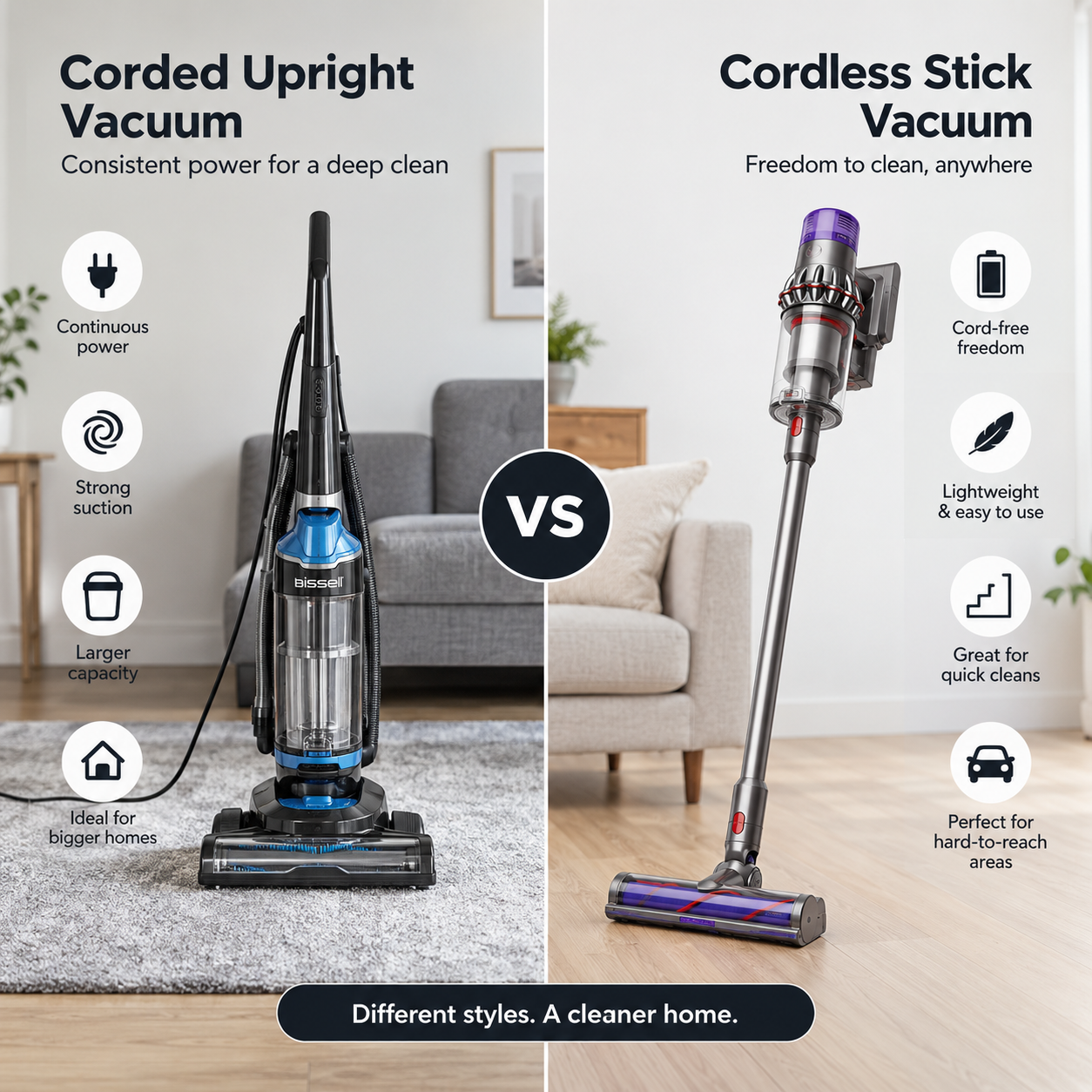
Corded vs Cordless Vacuums: Which Cleans Better for Your Home?
It’s one of the most common crossroads in vacuum shopping: do you go corded for uncompromising power, or cordless for freedom of movement? Both camps have loyal fans, and both have genuine downsides the marketing rarely mentions. Here’s an honest breakdown of how they actually compare, so you can pick based on your home rather than whichever ad you saw last.
The Quick Comparison
| Corded Vacuums | Cordless Vacuums | |
| Power | Consistent, unlimited runtime | Strong but battery-limited |
| Runtime | Unlimited (while plugged in) | Typically 25–70 minutes |
| Weight | Heavier, less portable | Lightweight, easy to carry |
| Storage | Bulkier, needs a cupboard | Compact, wall-mountable |
| Maintenance | Simpler, fewer parts to charge | Battery care, charging routine |
| Best for | Large homes, deep cleans | Quick cleans, tight spaces, stairs |
| Typical price | Often cheaper for the power you get | Pay more for portability |
The Case for Corded
There’s a reason corded vacuums haven’t disappeared despite years of cordless hype: raw, consistent power. A corded machine like the Vax Air Stretch doesn’t have a battery ticking down while you clean plug it in and it runs at full strength for as long as you need. The Air Stretch specifically pairs that with a genuinely long reach, combining a stretch hose and extended cord for up to 17 metres of coverage, so you’re not constantly unplugging and re-plugging as you move between rooms.
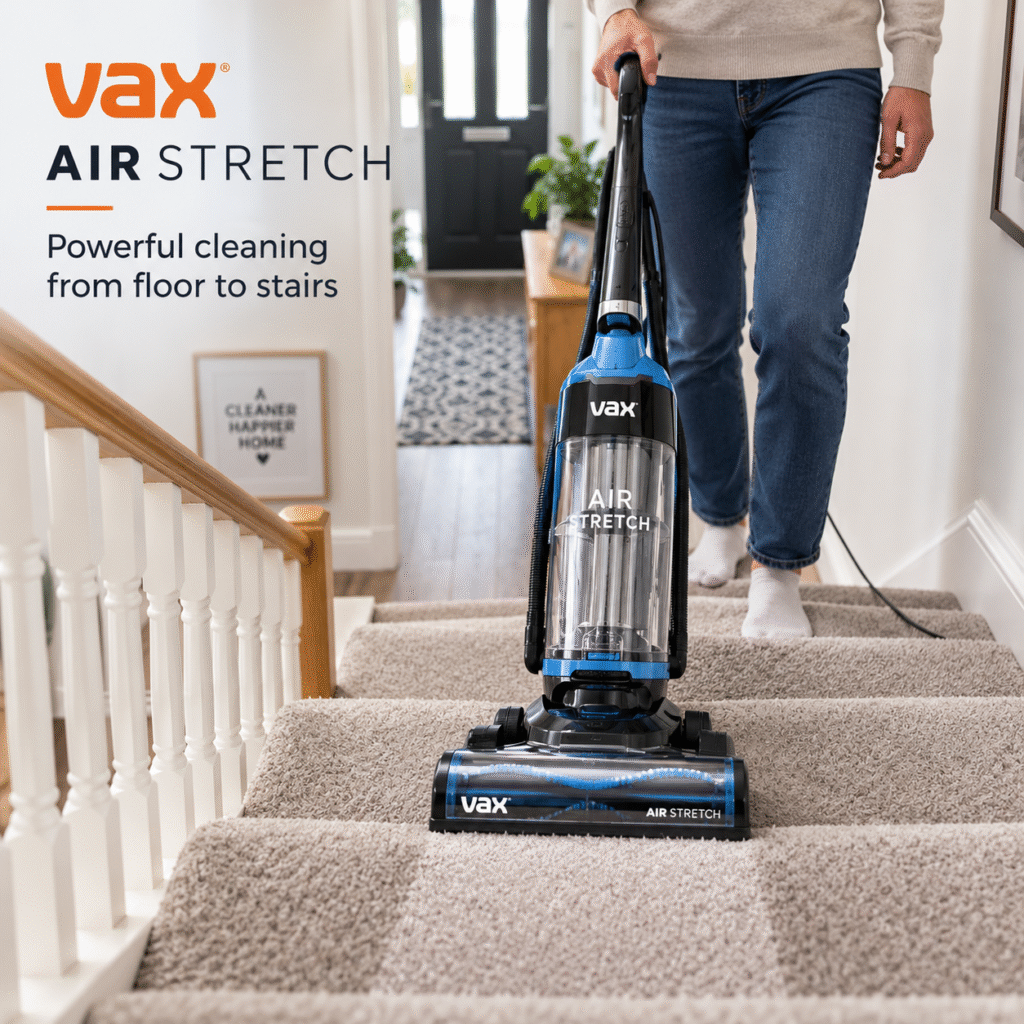
Corded uprights also tend to come with larger dust capacities; the Air Stretch holds 1.5 litres, roughly three times what most cordless sticks manage which matters if you’re doing a proper weekly deep clean rather than daily touch-ups. The trade-off is obvious: you’re tethered to a socket, and lugging an upright around multiple floors gets old fast if your home has stairs.
The Case for Cordless
Cordless vacuums solve the exact problem corded ones create: freedom of movement. No cord to trip over, no hunting for the nearest socket, and models like the Dyson V8 convert between stick and handheld in seconds, making them just as useful for a car interior or a sofa as they are for the living room floor. That flexibility is why cordless has become the default choice for quick, frequent cleaning rather than one big weekly session.
The catch is battery life. The V8, for instance, runs for around 40 minutes on standard power, dropping to roughly 25 minutes on Max/boost mode, plenty for a quick clean, but not always enough for a full house top-to-bottom without a recharge break. Dust bins also tend to be smaller on cordless models, meaning more frequent emptying during bigger jobs.
Upright Vacuum vs Cordless: Which Wins on Convenience?
This is really where the decision comes down to what “convenient” means for your home. An upright vacuum vs cordless comparison isn’t as simple as picking a winner; it depends on how you actually clean. If you do one thorough session a week and want to get it over with quickly on full power, an upright wins on efficiency. If you’re the type to do five-minute touch-ups throughout the week rather than one big clean, cordless wins by being ready to grab at any moment without setup.
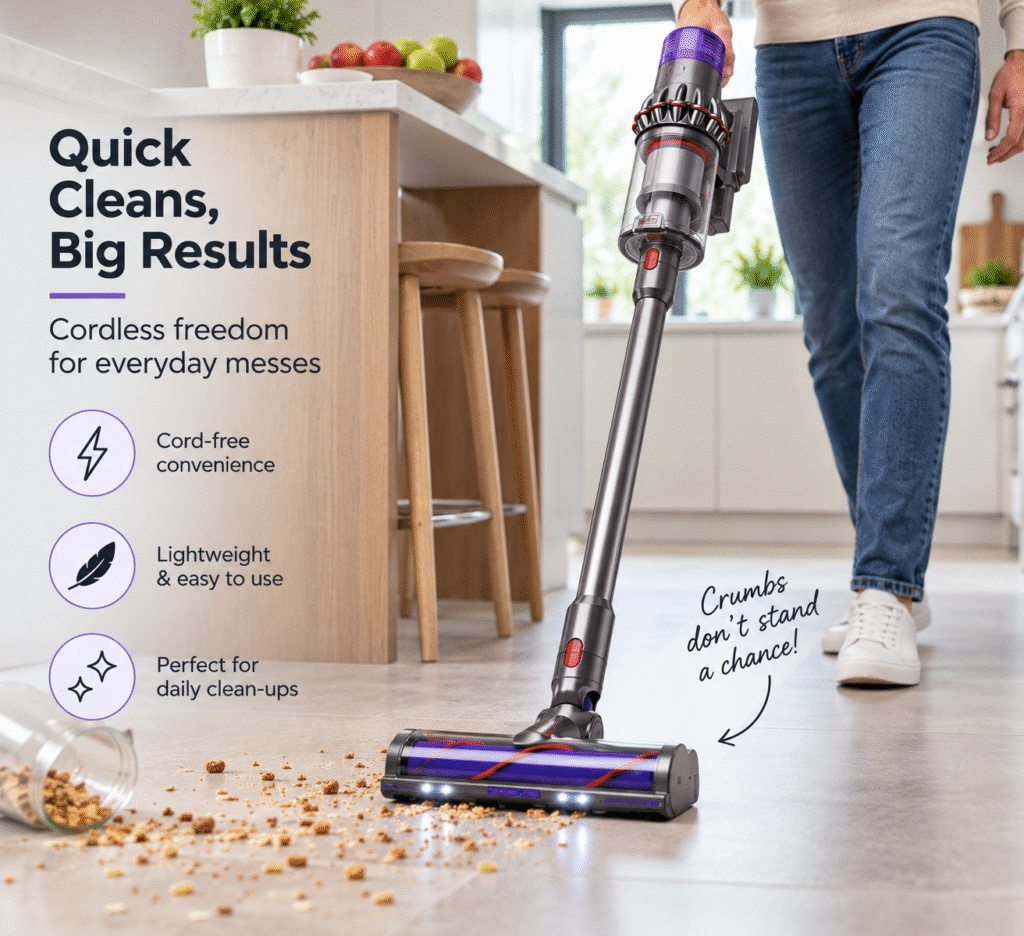
Storage matters here too an upright needs a cupboard or utility space, while most cordless vacuums wall-mount neatly or tuck into a small corner.
So, What’s the Best Vacuum Type for You?
Here’s the honest breakdown by situation, since there’s no single best vacuum type that fits everyone:
- Large home, mostly carpet, want one thorough weekly clean? Corded wins you get unrestricted runtime and stronger sustained suction.
- Small flat or open-plan home, want daily quick cleans? Cordless wins grab-and-go convenience beats raw power for frequent light cleaning.
- Multiple floors or a lot of stairs? Cordless again carrying an upright vacuum up and down stairs gets old fast.
- Pet hair and allergies are a daily battle? Either works, but check filtration specifically HEPA-equipped models (available in both corded and cordless ranges) matter more here than the cord question.
- Budget is tight and you want maximum power per pound? Corded models like the Air Stretch typically deliver more raw performance for less money than a cordless equivalent.
Our Picks
Best corded pick – Vax Air Stretch A powerful, budget-friendly upright with a genuinely long reach and a large dust capacity ideal for thorough weekly cleans across a full home.
“Check Price” for the Vax Air Stretch
Best cordless pick – Dyson V8 Lightweight, converts to handheld in seconds, and still delivers strong suction for daily quick cleans a dependable entry point into cordless cleaning.
“Check Price” for the Dyson V8]
The Bottom Line
Neither corded nor cordless is objectively “better” they’re built for different cleaning habits. If your priority is unrestricted power and a proper deep clean, corded still delivers more for less money. If your priority is convenience, flexibility, and cleaning little and often, cordless is worth the trade-off in runtime. The best move for a lot of homes, honestly, is owning one of each a corded upright for the weekly deep clean, and a cordless stick for everything in between.