
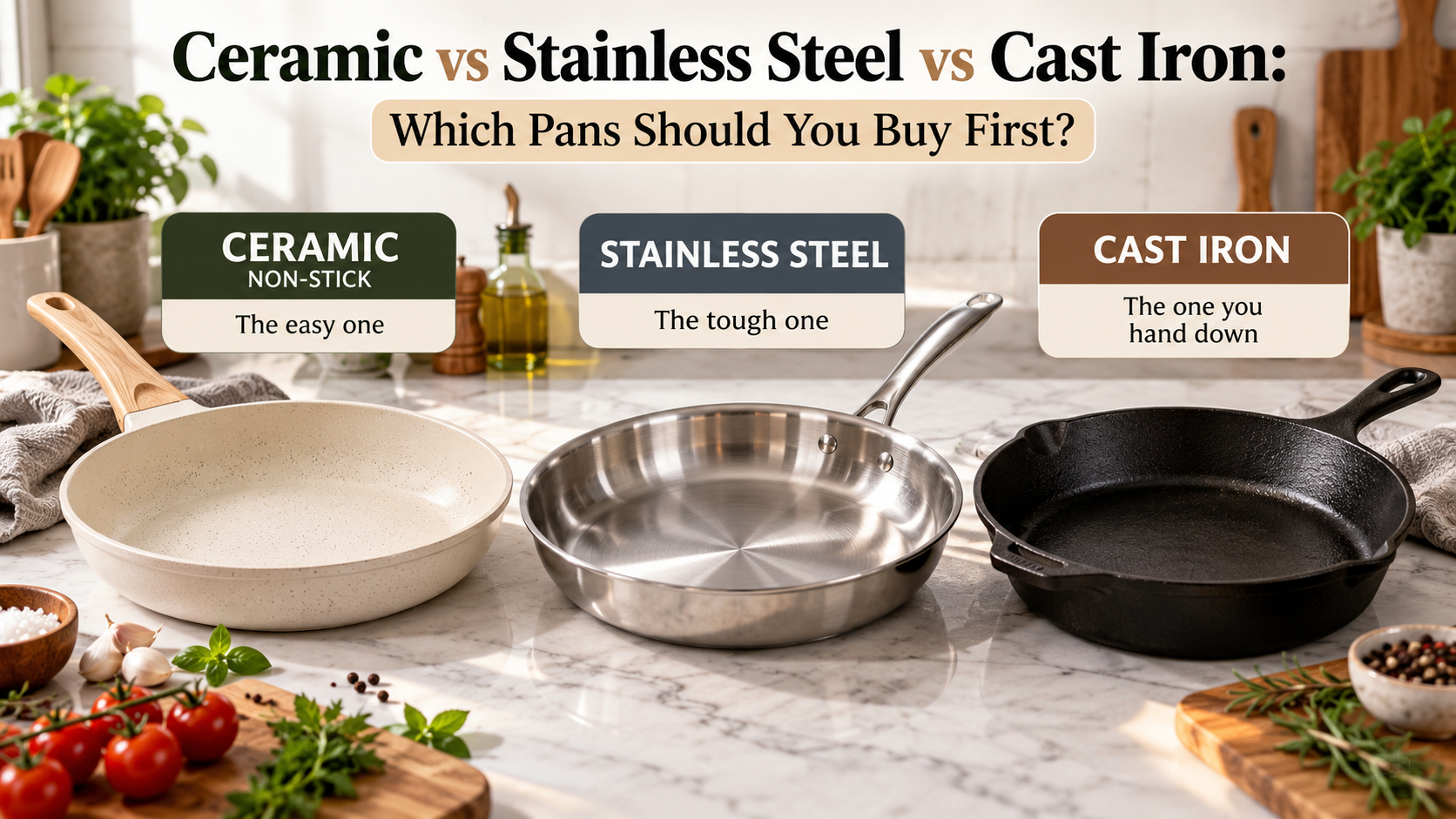
Ceramic vs Stainless Steel vs Cast Iron: Which Pans Should You Buy First?
Three pans. Three personalities. One is forgiving, one is tough, one gets better with age. Pick the wrong one for how you actually cook, and you’ll hate your cookware by Wednesday.
The 10-second answer
If you want… Buy Why Easy, low-effort cooking CAROTE 11-piece ceramic non-stick set Food releases with little oil, wipe-clean One pan for life Lodge 10.25″ cast iron skillet Seasoning improves with use A coated stainless look Nuovva 8-piece copper-finish set Premium look, easy-release inner coating
Ceramic non-stick: the easy one
CAROTE’s 11-piece set is a good example of the category. It is a granite-style non-stick coating that the brand says is free of PFOS, PFOA, lead and cadmium. You get a 24cm frying pan, two saucepans with lids (18cm/2L and 20cm/2.8L), a 24cm/4.1L stockpot and a 28cm/4.4L saute pan, and it works on induction.
Why beginners love it: food releases with little oil and cleanup is a wipe. The catch: coatings wear. One Amazon UK reviewer said theirs stopped releasing food within two months. Treat coated pans as something you’ll replace every few years, not for life. Keep the heat moderate and the utensils soft.
Cast iron: the one you hand down
Lodge’s skillet is pre-seasoned with vegetable oil, with no synthetic coating. That seasoning is oil baked into the iron, and it gets better the more you cook. It holds heat brilliantly, so it’s the one for searing steaks, and it goes from hob to oven.
Why people love it: it can last generations with basic care. The catch: it is heavy, it needs a quick wipe and oil after washing, and it doesn’t belong in the dishwasher.
Stainless steel: the tough one
Uncoated stainless is the most durable option. It handles metal utensils and high heat, and it’s great for searing and building pan sauces. The Nuovva 8-piece set sits in the middle: a stainless build with an easy-release inner coating, a copper-coloured outside, glass lids and wooden handles.
Why people love it: it looks good and lasts. The catch: uncoated stainless has a learning curve, because food sticks if the pan isn’t properly preheated. A coated version like Nuovva’s is gentler to learn on, but the coating will wear like any other. If you want proper uncoated stainless and avoid nickel, see our HOMI Chef review [insert internal link].
60-second decision guide
- Cook eggs, fish, pancakes, and hate scrubbing? Ceramic.
- Want one pan for steaks, cornbread, and campfires, and don’t mind weight? Cast iron.
- Want the pans to look great on the hob and handle everything? Stainless, or a coated stainless if you’re still learning.
- Building a kitchen from scratch on a tight budget? A ceramic set covers the most pans for the lowest upfront cost.
- Not sure? Buy a ceramic set for daily use and add one cast iron skillet for searing. That pair covers most home cooking.
Check before you buy
- Induction: make sure the listing says induction-compatible. Not every pan is.
- Weight: a 10.25″ cast iron skillet is heavy. If you’ve got a wrist injury or a tiny kitchen, hold one in a shop first.
- Oven limits: check the maximum oven temperature on the specific product, especially with glass lids and wooden handles.
- Dishwasher: cast iron, no. Coated pans, check the listing. Hand-washing makes any of them last longer.
Quick FAQ
Which is easiest for a complete beginner? Ceramic non-stick. It forgives heat and oil mistakes while you learn.
Does cast iron really outlast the others? With care, yes. Coatings wear over years; iron doesn’t.
Can I put them in the dishwasher? Cast iron, no. Coated pans vary, so check the listing. Hand-washing is the safest bet for all three.
Ready to decide? CAROTE ceramic set → · Lodge cast iron skillet → · Nuovva copper-finish set →