Uncategorised
Air Fryer vs Oven: Which Is Cheaper and Healthier in 2026?

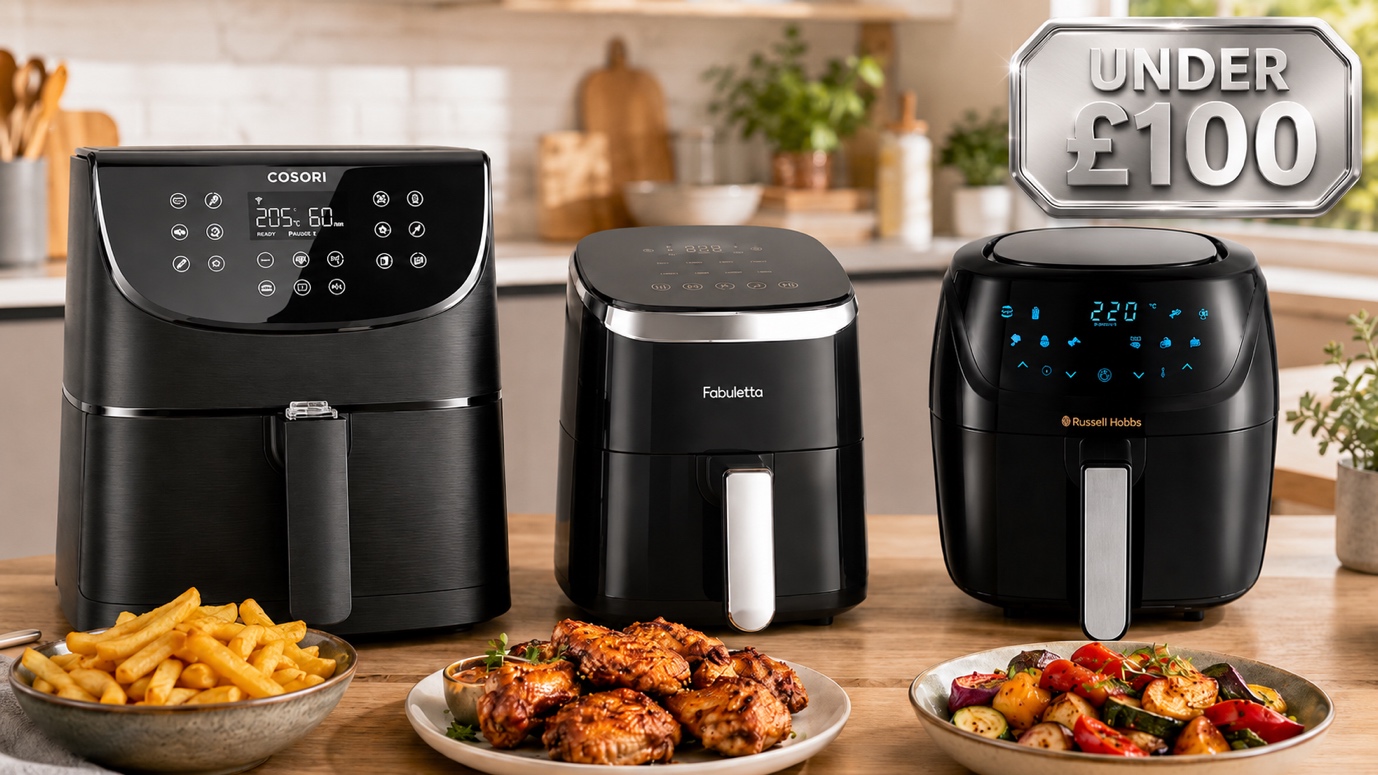
In recent years, the air fryer has gone from being a kitchen trend to something you now find in millions of homes. 

Many see Covid as the catalyst for this surge in popularity, with the rate of home cooking skyrocketing. However, a second key reason comes from one simple claim: they cost less to run than an oven. This arguably has taken the product from a trend to an essential home appliance.  

It begs the question: Why heat a full-size oven for two chicken breasts or a small portion of chips when an air fryer can heat a much smaller space?

But the real air fryer vs oven comparison is more nuanced. Air fryers usually are cheaper for smaller meals, but capacity also matters. And while they can help you use less oil, they still dont automatically make everything healthier.

So, in 2026, when does an air fryer actually save money, and when is the oven still the better choice?

The quick answer

  • Cheapest for small meals: Air fryer
  • Best for large meals: Oven
  • Faster for everyday cooking: Air fryer
  • Healthier: Sometimes, depending on the food
  • Is an air fryer worth it? Usually yes, if you regularly cook smaller portions.

Check out the Ninja Air Fryer PRO on Amazon

Air fryer vs oven: which is cheaper to run?

This is where the air fryer shines. 

From July to September 2026, Ofgem’s average capped electricity rate for a household on a standard variable tariff paying by Direct Debit is 26.11p per kWh. Your exact rate may differ depending on your tariff and location, but it gives us an idea of the numbers for comparison’s sake. 

Which? recently tested an air fryer against a built-in electric oven using the same foods. For a 1.3–1.4kg roast chicken, the air fryer used 0.54kWh and cost around 14p. The oven used 1.157kWh and cost roughly 30p.

The air fryer was also faster, finishing in 53 minutes compared with 76 minutes in the oven. 

Now yes, a 16p saving on one roast chicken is hardly life changing. But use an air fryer several times a week, and those small savings start to add up.

Why does an air fryer use less energy?

Despite the name, an air fryer is essentially a compact, powerful fan oven. A heating element warms the air while a high-speed fan circulates it around the food. Because the cooking chamber is much smaller than a conventional oven, there is far less empty space to heat.

The British Heart Foundation says air fryers can cook food around 20–25% faster than a fan oven, with many foods also requiring little or no preheating. 

That’s really what explains the lower air fryer energy cost UK households often hear about. The appliance isn’t performing some completely different kind of cooking, it’s just heating a much smaller space, usually for less time.

When does the oven make more sense?

Capacity is the part that often gets overlooked.

If you’re cooking two portions of chips and a couple of chicken breasts, one air fryer cycle may be enough. If you’re cooking for six people and need to run the air fryer three times, those energy savings quickly start disappearing.

Which? reached the same conclusion in its testing. The biggest savings came when cooking smaller amounts, while using an oven can become more economical if you’d otherwise need several separate air fryer batches. 

So the simplest rule is:

Small meal = air fryer.

Large meal with several trays = oven.

If an air fryer makes sense for your household, you can view the Ninja AF140UK on Amazon UK here.

Is an air fryer healthier than an oven?

This is where some misconceptions come into play. 

One of the genuine air fryer benefits is that crispy food can be made with very little oil. The British Heart Foundation notes that 1kg of homemade air-fried chips can be cooked using around one tablespoon of oil, making them substantially lower in fat than deep-fried chips. 

Compared with an oven, however, it really depends on what you’re cooking.

If you’d normally roast potatoes using several tablespoons of oil but can get a similar result in an air fryer with a light spray, the air-fried version may contain less added fat.

But putting a plain chicken breast or salmon fillet into an air fryer instead of an oven doesn’t suddenly make it healthier. The BHF notes that foods already cooked with little or no additional fat may see essentially no nutritional difference. 

And an air fryer can’t turn highly processed food into health food either. A breaded chicken burger is still a breaded chicken burger, it might just come out crispier without needing more oil.

Where air fryers genuinely shine

Convenience may actually be one of the biggest air fryer benefits.

There isn’t much sense heating a full-size oven for two chicken breasts, a small portion of frozen chips or yesterday’s pizza. An air fryer can handle those jobs quickly without needing to heat a large cooking cavity first.

That’s why it’s probably better to think of one as a smaller alternative to your oven rather than a total replacement.It handles all those times where switching the full oven on feels a little excessive.

A sensible Amazon option

One solid option is the Ninja Air Fryer PRO AF140UK.

It has a 4.7-litre single drawer, four cooking functions: Air Fry, Roast, Reheat and Dehydrate, and enough space for a whole 1kg chicken. Ninja positions it primarily for one or two people, which fits particularly well with the smaller meals where an air fryer tends to be most efficient. 

Most importantly, the AF140UK is currently available to buy through Amazon UK. Best get it quick though, as prices are subject to change. 
Check out the latest price on Amazon UK

The verdict

So, air fryer vs oven: which wins?

For smaller meals, the air fryer.

It heats less space, generally cooks faster and independent testing in 2026 shows that it can use substantially less electricity than a built-in electric oven. 

But the oven certainly isn’t obsolete. If it’s Christmas dinner and you’re filling up multiple trays, its much larger capacity can make it the more practical choice.

The health argument is similar. Air fryers can reduce the amount of oil needed for crispy foods, which is a bonus, but what you’re actually cooking still matters far more than the appliance itself.

Perhaps that’s the fairest way to look at an air fryer in 2026: it isn’t really an oven replacement. It’s a faster, smaller and often cheaper alternative for all the times when turning the full oven on feels like overkill.

Uncategorised
Krups Essenza Mini Review: The Best Compact Pod Machine for Small Kitchens?

Coffee machines have a habit of taking over the kitchen. Take Bean-to-cup models for example; they can make excellent coffee, but they also claim a fairly large amount of worktop space. 

You won’t find this problem with the Krups Essenza Mini. At just 8.4cm wide, it is genuinely tiny, narrow enough to squeeze beside a kettle, fit into a small flat kitchen or sit on a desk in a home office. Plus, despite that, it still uses Nespresso’s Original capsule system, offers 19-bar pressure and heats up in around 25 seconds.

So, is the Krups Essenza Mini actually a good compact coffee machine, or has Krups made one compromise too many in the name of saving space?

The quick answer

  • Best for: small kitchens, flats, offices and single or dual-person households.
  • Where it shines: tiny footprint and almost no learning curve.
  • Where it falls short: the 0.6-litre water tank needs refilling more often than larger machines.
  • Price: £116.99 on Amazon (subject to change) 
  • Drinks: espresso and lungo.
  • Worth buying? Yes, if you want quick Nespresso coffee without giving up half your worktop.

Check out the Krups Essenza Mini on Amazon UK:  https://amzn.to/3U8pGiV

It really is small

“Compact” gets used pretty generously in appliance marketing, but the Essenza Mini earns it.

Krups lists the machine at 204mm high, 330mm deep and only 84mm wide, with a weight of around 2.3kg. Meaning it’ll take up less space than your average kettle. 

For a small kitchen, that matters. It can fit into narrow gaps that would rule out most bean-to-cup machines, and at 2.3kg it is easy enough to move if you need the space back.

The design is equally stripped back and simple: two drink buttons, a removable 0.6-litre water tank, a drip tray and a container for around five or six used capsules. No touchscreen, no app and no endless settings.

In this case, that simplicity feels more like a feature than something missing.

What is it actually like to use?

The routines nice and easy: fill the tank, insert a Nespresso Original capsule and press either espresso or lungo.

Krups quotes a 25-second heat-up time, so this is very much a “coffee before leaving the house” machine rather than one aimed at people who enjoy spending ten minutes adjusting grinders and weighing beans. The two drink volumes can also be programmed if you prefer a slightly longer or shorter cup.

The 19-bar pump sounds impressive on a spec sheet, but the everyday advantage is consistency. There is no grinding, dosing or tamping, and very little chance of completely ruining a cup before work in the morning. 

T3’s hands-on review reached a similar conclusion, praising the Essenza Mini for its straightforward operation and consistent espresso, while also finding it relatively quiet compared with some larger machines.

Will it beat freshly ground beans from a good bean-to-cup machine? Probably not. But that isn’t really the point. The Essenza Mini trades some of that potential quality for speed, convenience and a footprint that is hard to beat.

If you’re still deciding which type of machine suits you best, our Tassimo vs Nespresso vs bean-to-cup comparison breaks down the difference in costs, quality, and convenience.

Related Article: https://houseappliancespro.co.uk/2026/08/tassimo-vs-nespresso-bean-to-cup/

The small tank is the main compromise

There had to be one. 

The 0.6-litre water tank is perfectly reasonable for one or two people making a couple of coffees, but larger households will notice it quickly. The used-capsule container is also small, holding roughly five or six capsules before it needs emptying.

That makes the Essenza Mini a poor fit for making coffee for a queue of people. If you have plenty of kitchen space and regularly make four or five drinks back-to-back, a larger machine will probably be more convenient.

In a flat, office or smaller household, though, the compromise makes much more sense.

And that’s really the theme of this Essenza Mini review: almost every limitation comes back to the fact that the machine is tiny. The tank is small because the machine is small. The capsule bin is small because the machine is small. Whether those are genuine problems depends entirely on how many coffees you’re expecting it to make.

What about cappuccinos and lattes?

This is probably the clearest reason not to buy it.

There’s no built-in milk frother. The machine itself offers espresso and lungo, so cappuccinos, flat whites and lattes need milk to be heated and frothed separately.

That’s hardly a problem if you mostly drink espresso or black coffee, but if your default order is a latte every morning, its going to remove some of the one-button convenience.

There’s also a quirky side effect: buy a separate milk frother and place it beside the Essenza Mini, and you immediately start eating into some of the worktop space you saved by buying such a tiny machine in the first place.

Running costs are worth thinking about

For £116.99, the machine itself is relatively simple, but pod costs are something worth considering before buying. 

Every cup uses an individual capsule, which is certainly convenient but will generally cost more over time than buying loose beans or ground coffee.

The upside is choice. Nespresso’s Original range covers numerous espresso and lungo styles, while the machine can also work with compatible Original-format capsules.

Then there’s the waste question. Nespresso does operate a free UK recycling system for used aluminium capsules, including drop-off points and collection options, but it still relies on actually saving and returning the capsules rather than putting them straight in the bin.

Who should actually buy the Krups Essenza Mini?

Buy it if:

  • Worktop space is genuinely limited.
  • You mainly make coffee for one or two people.
  • You want simplicity in your coffee making 
  • You already like the Nespresso Original system.

Skip it if:

  • You regularly make several coffees back-to-back.
  • You want one-touch cappuccinos or lattes.
  • You’re looking for the lowest possible cost per cup.
  • Freshly ground coffee matters more to you than convenience.

The verdict

The Krups Essenza Mini is easy to underestimate because there simply isn’t much to it — and that’s exactly why it works.

It doesn’t try to compete with a £500 bean-to-cup machine or turn you into a home barista. It makes espresso and lungo quickly, consistently and with very little mess, while occupying an almost comically small amount of kitchen space.

For a large household, the little tank and capsule container could become annoying fairly quickly. For one or two people in a flat or smaller kitchen, those compromises are much easier to accept.

If what you actually want is a small pod coffee maker that can sit quietly in the corner and produce a decent coffee in under a minute, the Krups Essenza Mini remains a very sensible choice.

At the time of writing, the machine is available through Amazon UK at £116.99, although the price, colour and individual seller can change.

Check out the Krups Essenza Mini on Amazon UK: https://amzn.to/3U8pGiV

Quick FAQ

Does the Krups Essenza Mini use Nespresso Original pods?
Yes. The Essenza Mini uses Nespresso Original capsules rather than the larger Vertuo capsule system.

How big is the water tank?
The removable water tank holds 0.6 litres.

Can the Essenza Mini make lattes?
Yes, but not by itself. You’ll need a separate milk frother and can then use an Essenza Mini espresso as the base for a latte, cappuccino or flat white.

Is the Krups Essenza Mini good for a small kitchen?
That’s arguably where it makes the most sense. At only 8.4cm wide, its footprint is considerably smaller than most full-sized coffee machines.


Uncategorised
The Great Coffee Machine Face-Off: Tassimo vs Nespresso vs Bean-to-Cup

Search for a pod coffee machine uk shoppers actually buy, and you’ll run straight into the same three names over and over: Tassimo, Nespresso, and increasingly, bean-to-cup machines that skip pods altogether. They all promise the same thing: good coffee with minimal effort, but they get there in genuinely different ways, at genuinely different prices. Here’s how the Tassimo vs Nespresso debate actually shakes out, and where a bean-to-cup coffee machine fits into the picture.

The quick answer

  • Cheapest and most flexible drinks menu: a Tassimo machine — coffee, tea, and hot chocolate from one machine, budget-friendly to buy: https://amzn.to/4hWF4IN
  • Best all-round espresso and simplest to use: Nespresso — barcode-read pods, fast heat-up, widely available capsules: https://amzn.to/4wQM3rs
  • Best actual coffee, if you’re willing to spend: a bean-to-cup coffee machine — grinds fresh beans, no pods at all, but a serious price jump: https://amzn.to/4hmVB8Q

How the three systems actually differ

All three are “insert something, press a button” machines, but what you’re inserting is completely different. Tassimo and Nespresso both use sealed, pre-portioned pods that the machine reads via barcode and brews automatically. The difference between them is mostly in drink range, pod cost, and design. A bean-to-cup coffee machine skips pods entirely: it has its own built-in grinder and grinds whole beans fresh for every cup, which is where the flavour and price differences really come from.

1. Tassimo — the widest drinks menu for the least money

A tassimo machine like the Bosch Suny works by reading a barcode printed on each T Disc pod, which tells the machine exactly how much water to use, at what temperature, and for how long. Its ‘Intelibrew’ system covers more than 40 drinks: coffee, tea, hot chocolate, even chai lattes, which none of the other two systems match; Nespresso and bean-to-cup machines are coffee-focused, full stop.

Tassimo machines also tend to be the cheapest to buy outright of the three machines, and the compact 0.7-litre design fits into small kitchens easily. The trade-off is the pods: they’re proprietary, and milk-based drinks need two pods per cup rather than one, so running costs climb faster than the low buy-in price suggests.

Link: https://amzn.to/4hWF4IN

2. Nespresso — the espresso specialist

Where Tassimo casts a wide net across hot drinks generally, Nespresso is laser-focused on espresso-style coffee. The Vertuo Pop reads a barcode on each capsule the same way Tassimo does, but heats up in around 30 seconds and brews four fixed sizes: espresso, double espresso, gran lungo, and mug, with the machine automatically adjusting water volume to match. It carries a list price of £99. However, it’s occasionally discounted on Amazon UK to closer to £50–65, putting it in a similar bracket to Tassimo once discounts are factored in.

One catch: the Vertuo Pop doesn’t include a milk frother, so cappuccino and latte drinkers will want to budget for one separately. Its 600ml water tank is also on the small side, holding enough for roughly two mugs before a refill.

Link: https://amzn.to/4wQM3rs

3. Bean-to-cup — the De’Longhi Magnifica, and a genuinely different price tier

This is where the comparison changes shape entirely. A bean-to-cup coffee machine doesn’t use pods at all — it grinds whole beans fresh for every single cup, and the De’Longhi Magnifica Start is a well-known entry point into this category. It offers four one-touch recipes: espresso, double espresso, coffee and cappuccino, plus a separate hot water function, all from a soft-touch control panel. Its LatteCrema Hot milk carafe handles automatic milk frothing for cappuccinos and lattes, and the machine grinds, doses and tamps fresh beans for every single cup rather than working from a pod.

It’s still a real step up in price from Tassimo or Nespresso, but a smaller jump than the very top of the bean-to-cup market. Independent price trackers put it in the roughly £287–350 range depending on retailer and offers, so its around three to four times the price of a Tassimo or discounted Nespresso machine. Which?, the UK’s independent testing body, has lab-tested this exact model, and reviewers on independent feedback platforms have praised its ease of use and coffee quality, though the control panel offers fewer customisation options than pricier bean-to-cup machines.

Link: https://amzn.to/4hmVB8Q

Which one should you actually buy?

  • Want the widest range of drinks (not just coffee) for the least money? A tassimo machine covers you.
  • Coffee-focused, want the simplest possible espresso routine, and don’t mind buying a milk frother separately? Nespresso is the specialist’s pick.
  • Coffee is a genuine daily ritual, you want real ground-bean flavour, and budget isn’t the deciding factor? The bean to cup coffee machine route is a different league entirely, at a different price entirely.

There’s no universal winner in the tassimo vs nespresso debate, and bean-to-cup isn’t really competing with either of them — it’s a different category, at a different price point, for a different kind of coffee drinker.

A few things worth checking before you buy

  • Pod cost adds up regardless of brand. Both Tassimo and Nespresso lock you into proprietary pods, so factor in ongoing cost, not just the machine price.
  • Milk drinks aren’t automatic on every machine. The Vertuo Pop needs a separate frother; check whether your chosen machine includes one before assuming cappuccinos are covered.
  • Bean-to-cup means more maintenance. The Rivelia’s dual hoppers and grinder need more regular cleaning and descaling than a pod machine, so factor that into the higher price, not just the label cost.

Quick FAQ

Is Nespresso or a tassimo machine cheaper to run? Both use proprietary pods, so running costs are broadly comparable. However the bigger cost gap is against bean-to-cup machines, which use loose beans instead.

Is a bean to cup coffee machine worth the extra money over Tassimo or Nespresso? Only if coffee quality genuinely matters to you day to day. The flavour difference is real, but so is the price difference, which is considerably higher for a machine like Magnifica.

Can Nespresso machines make tea or hot chocolate like Tassimo? No — Nespresso is coffee-only. Tassimo’s T DISC system is the one built for a wider hot drinks menu.

Uncategorised
Bosch Coffee Machines Review 2026: Which Model Is Right for You?

If you ask five people what a Bosch coffee machine actually is, you’ll get five different answers, and none of them will be wrong. Unlike most appliance brands that make one type of coffee machine in a few sizes, Bosch runs three completely separate coffee-making operations under the same name. These are: pod machines, bean-to-cup machines, and old-school filter machines. Buy the wrong one, and you could end up with a filter machine when what you actually wanted was a cappuccino at the push of a button. So before anything goes in your basket, here’s an honest look at where each type shines — starting with the cheapest and working up to the machine that’ll actually make a dent in your bank balance.

The quick answer

  • Cheapest to buy and run: a classic Bosch coffee maker filter machine — no pods, no gimmicks, just a proper pot of coffee – https://amzn.to/4xsA8jD
  • Most convenient for daily use: a Bosch Tassimo pod machine — near-instant, zero learning curve – https://amzn.to/4xlu9wG
  • Best actual coffee (at a real price): a Bosch bean-to-cup machine — genuinely closer to café quality, but you’ll pay handsomely for it – https://amzn.to/4ghMFPZ

Bosch’s coffee machine range isn’t one thing — it’s three

1. Bosch filter machines — the “just make me a pot” option

If pods and beans both sound like more trouble than you signed up for, a straightforward Bosch coffee maker from the MyMoment filter range does the job with none of the complexity; it costs the least by a wide margin, with prices around £32 on Amazon UK . These machines are built around a swing-out filter holder, a removable water tank you can fill straight from the tap, and an “Aroma Intense” setting to adjust strength at the touch of a button, all wrapped in Bosch’s usual understated design. The TKA2M113GB model, for example, holds 1.4 litres — enough for around 10 cups — has an anti-drip spout so you can sneak a cup mid-brew, and keeps coffee warm for up to 40 minutes afterwards.

There’s no espresso here, but for a household that just wants a full pot without pods or descaling rituals, it’s the least fussy and least expensive option by far.

Affiliate link: https://amzn.to/4xsA8jD

2. Bosch Tassimo — the “just press a button” option

Any Bosch Tassimo machine works on the same core idea: pop in a T DISC pod, press one button, and the machine reads a barcode to automatically set water volume, temperature and brew time. The Tassimo My Way 2 goes a step further with a touch-sensor interface rather than plain buttons, letting you fine-tune and save your own strength, temperature and size preferences per drink. 

That extra capability puts it a notch above Bosch’s most basic Tassimo machines, and the price reflects it: it’s listed on Amazon UK at £74.99 — noticeably more than Bosch’s entry-level pod machines. Two things help justify that: a built-in BRITA MAXTRA+ filter for better-tasting drinks and less frequent descaling, and a 1.3-litre water tank, nearly double the size of Bosch’s basic Tassimo models. It’s still a pod machine, though, so T DISC running costs apply regardless, and milky drinks need two pods each rather than one.

Affiliate link: https://amzn.to/4xlu9wG 

3. Bosch Series 2 VeroCafe (TIG20119) — the “actually tastes like coffee” option (with a price tag to show it)

This is where things get genuinely interesting, and genuinely expensive. The Bosch Series 2 VeroCafe TIG20119 is Bosch’s bean-to-cup machine, built to bridge the gap between pod convenience and proper espresso-machine quality. Its Easy Select panel offers five drinks: black coffee, espresso, cappuccino, latte macchiato and warm milk, from illuminated touch-sensor buttons, with three strength levels to dial in. So, despite grinding whole beans fresh for every cup, it’s still very much a one-touch coffee machine rather than something you need barista training for.

The machine’s Aroma Max system automatically manages water flow rate, volume and temperature to keep results consistent cup to cup. Its MilkMagic Pro frother lets you froth milk directly in the cup rather than needing a separate jug, pour the milk in and the machine does the rest. It runs on a 250g bean container and a 1.4 litre water tank, so it doesn’t need constant topping up during a busy morning.

This is by far the priciest of the three as this model comes in at close to £500, roughly ten times the cost of the filter machine and five times a Tassimo. Real-world satisfaction backs that price up however, with a 4.30 out of 5 average customer rating on John Lewis and a 4.7 “Excellent” Trustpilot score as of December 2025. However, this is a “coffee is a genuine daily ritual” purchase, not an easy impulse buy.

Affiliate link: https://amzn.to/4ghMFPZ

Which one should you actually buy?

  • Big household, coffee traditionalist, or watching your budget? A filter Bosch coffee maker wins on both purchase price and running cost.
  • Live alone and want variety at a mid-range price? A Bosch Tassimo machine is the sweet spot of convenience and cost.
  • Coffee is a genuine daily ritual and price isn’t the deciding factor? A bean-to-cup Bosch coffee machine tastes noticeably better — just know it’s a serious spend, not a “bit more.”

There’s no single “best” Bosch coffee machine, only the one that matches how you drink coffee and what you’re willing to spend. Work that out first, and the rest of the decision makes itself.

A few things worth checking before you buy

  • Running costs, not just the price tag. A pod machine looks cheap on the shelf, but T DISCs add up fast if you’re making several drinks a day. The filter machine remains cheapest to run long-term by a clear margin.
  • Maintenance tolerance. Filter machines are practically maintenance-free. The TIG20119 keeps this manageable with a dishwasher-safe frother and an easily accessible service door, but bean-to-cup machines still need more regular attention than a filter machine.
  • How many people are actually drinking coffee. A 0.7-litre Tassimo tank is fine solo, borderline for a houseshare, and a genuine hassle for a family that all wants coffee before 8am.

Quick FAQ

Is a Bosch Tassimo the same as a Bosch bean-to-cup machine? No — they’re built for opposite priorities and priced very differently. Tassimo trades flavour ceiling for speed and a much lower price; bean-to-cup costs several times more but delivers noticeably better coffee.

Do Bosch filter machines take standard ground coffee? Yes. Unlike the pod-based Tassimo range, MyMoment filter machines aren’t locked into a proprietary system, so any ground filter coffee works.

Which Bosch coffee machine is cheapest to run long-term? The filter machines, by a clear margin — no pods or capsules, just ground coffee and paper filters, plus the lowest purchase price of the three.

Instagram